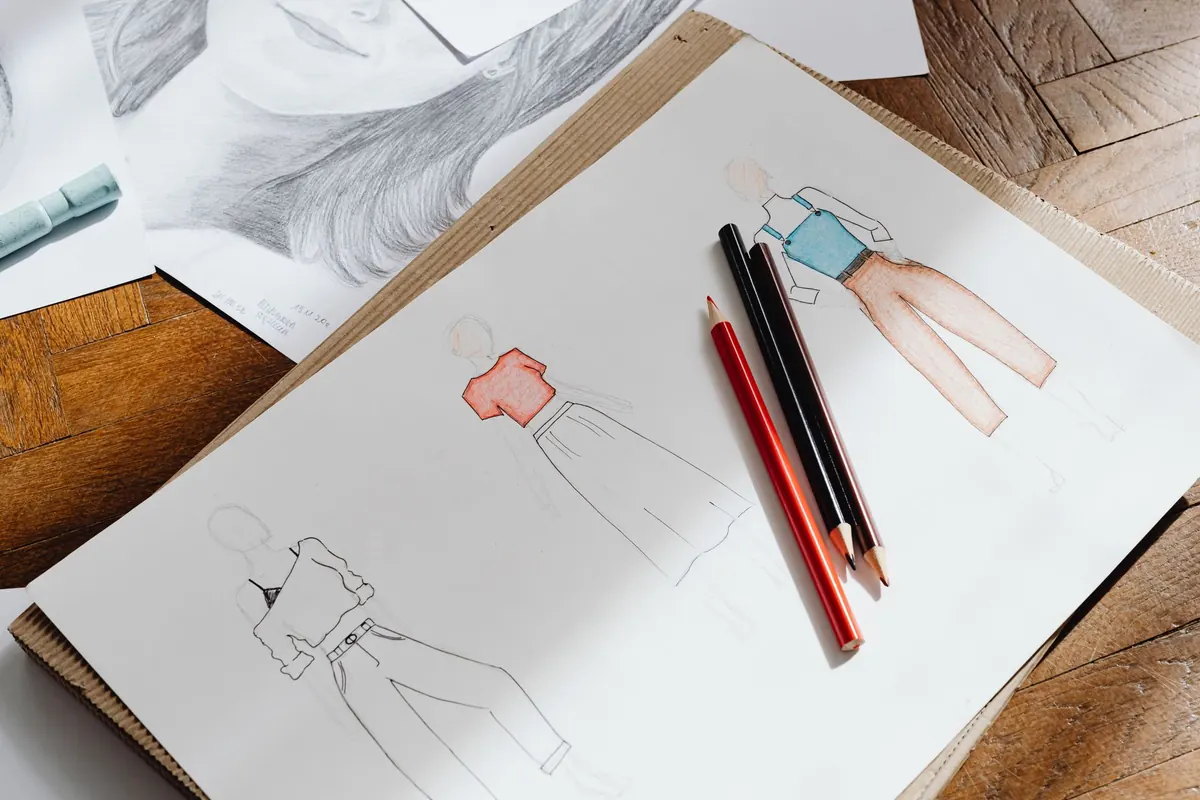
A pencil, a sheet of paper and something to lean on. That is genuinely enough to begin sketching, and most beginners spend far too much money finding it out. The trick is to buy a small set of things that work together, then add to it only when you notice a real gap. What follows is a shopper's checklist for the UK: what to buy first, what can safely wait, and how to walk past the boxed sets that promise everything and deliver a lot of clutter.
Buy pencils singly, not in a box
Graphite pencils run from hard, pale 9H at one end to soft, dark 9B at the other, with HB sitting in the middle. For sketching, you need the soft end far more than the hard end. Start with HB, 2B, 4B and 6B, and add a 2H later if you find yourself wanting fine, light construction lines.
Most proper art shops sell pencils loose from open stock, so you can pick up one of each rather than a tin of twenty-four in which you will use four and misplace the rest. This is the single easiest way to keep costs down. If you are buying online, check whether you are paying per pencil or per pack before you add anything to the basket.
A mechanical pencil earns its place
A 0.7mm mechanical pencil gives you a consistent line with no sharpening, which makes it handy for hatching, quick notes and the tidy edges of a drawing. It is not essential, but it is cheap and it stays sharp in a bag.
Get a point you can actually draw with
Buy a decent metal sharpener and a small sandpaper block, sometimes sold as a lead pointer. A short point suits detail; a long, exposed graphite tip laid on its side gives you soft, broad shading strokes. You can also draw with the flat edge of a 6B for quick blocks of tone, which is much faster than layering with an HB.
Paper is the decision that shapes everything else
Thin 80gsm printer paper buckles the moment you erase hard or use anything wet, and it feels awful under a soft pencil. Look for cartridge paper or a sketchbook of around 110–160gsm for graphite and pen work. If you plan to use watercolour or heavy ink washes, go heavier — 200gsm and up — or the sheet will cockle.
Texture matters too. Smooth paper suits fine detail, pen and pencil; a light tooth or "not" surface grabs graphite and gives you softer, grainier shading. Buy one book of each if you can afford it and see which you prefer.
Check it in your hand before you pay
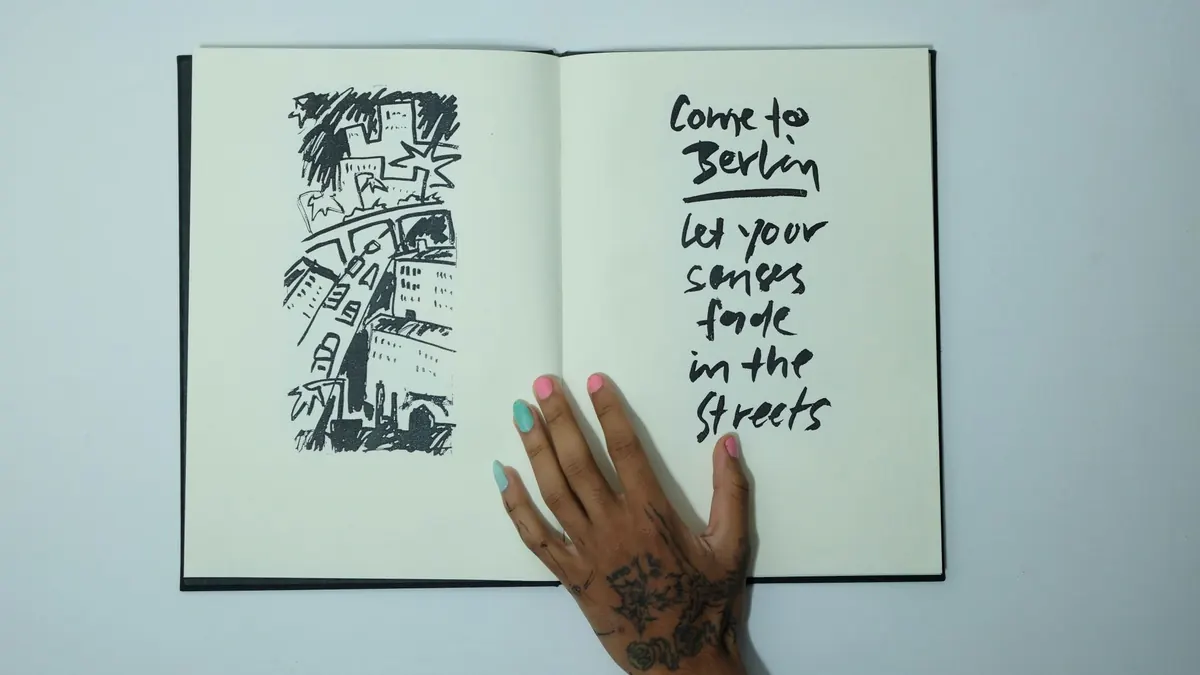
- Binding: a spiral or wire-bound book lies flat while you draw; a stitched hardback is tougher and travels better.
- Size: A5 for the bag, A4 for the desk. Anything larger is awkward unless you work standing at an easel.
- Pages: plain is usually best. Grids and heavy guidelines tend to fight your drawing.
- Feel: open it, rub a thumb across the page and check it does not feel like cheap copier paper.
The small items that quietly do a lot of work
A putty rubber lifts graphite gently without smearing it across the page, and you can shape it to a point for tiny highlights. A standard plastic eraser removes marks more thoroughly but can damage soft paper if you scrub. Use both lightly, and brush the debris away with a soft brush or the back of your hand rather than blowing it.
Beyond that: a metal sharpener that does not chew the wood, a sandpaper block, a couple of bulldog clips to hold a loose sheet to a board, and a tin or roll to keep it all together. A hardback book works fine as a drawing board when you are out, and a clipboard from a stationery shop costs very little.
An eraser is for lifting a highlight or cleaning up an edge, not for rescuing a drawing you lost control of. Draw lighter instead.
A little tone and colour goes a long way
You do not need colour to learn to see, but one added medium keeps things interesting. A water-soluble graphite pencil gives you pencil marks plus soft washes with a damp brush. A brush pen offers bold, confident darks. A handful of coloured pencils in a limited palette — a warm grey, a cool grey, an ochre, a dark blue — will carry you surprisingly far.
If you want to try watercolour, note that the very cheapest pan sets have weak, chalky pigment and thin paper buckles underneath them. Either set watercolour aside for now, or buy a small set with a heavier sketchbook and accept that you are paying for paper as much as paint.
Where to shop, and what to walk past
High street art shops are the best place to start because you can buy loose pencils, feel the paper and ask questions. Large stationery chains are fine for sharpeners, clips and cheap practice pads. Supermarkets occasionally sell usable graphite cheaply. Online art suppliers are good for own-brand sketchbooks bought in multiples, but watch postage on small orders.
Walk past the enormous beginner sets. They bundle brushes, pastels and paints you will not use for months, and the quality is often spread thin. Also be wary of novelty kits and anything sealed in plastic that you cannot open. If money is tight, check sale baskets, own-brand ranges, and any student discount you are entitled to.
Your starting checklist
- Four graphite pencils: HB, 2B, 4B, 6B (bought singly if you can).
- A 0.7mm mechanical pencil, optional but useful.
- One A5 sketchbook and one A4 sketchbook, around 110–160gsm.
- A putty rubber and a plastic eraser.
- A metal sharpener and a sandpaper block.
- A bulldog clip or two, and a tin or pencil roll.
- One wildcard: a brush pen, a water-soluble pencil or three coloured pencils.
Make the kit earn its keep
The habit matters more than the haul. Keep the A5 book in your bag and draw something small every day — a mug, a shoe, the view from the bus. Ten minutes of looking closely will teach you more than an hour of watching tutorials. Work in good light, sit comfortably, and take a break when your shoulders creep up towards your ears.
Give yourself a month with this kit before buying anything else. When you finish a pencil or fill a book, replace it and add one thing you genuinely missed. That way your supplies grow to fit your drawing rather than the other way round, and you will still be using most of what you own a year from now.
Photo: Lucas George Wendt / Pexels