London's markets are the best free life-drawing class in the city, and the tuition is charged in nerve rather than pounds. A stallholder builds a pyramid of figs; a customer counts coins into a cupped hand; a delivery driver reverses a pallet through a gap that shouldn't exist. Ten seconds later the arrangement has changed and your pencil is still hovering above the paper. That is both the difficulty and the joy of sketching markets: the subject keeps moving, so you have to decide what matters before it's gone.
You don't need to be fast to start. You need to be willing to leave things out. Every market in London will give you more than you can draw, which is exactly what makes it such good practice.
Choose the market that matches your pencil
Markets have different rhythms, and picking the wrong one for your mood can turn an hour into a slog.
Borough, on a weekday morning, is dense and canopied: low light, strong verticals, bodies packed between stalls. It rewards an architectural eye and a crowd rather than careful individual portraits. Columbia Road on a Sunday is colour and flowers in a narrow, crowded space, so draw for gesture and hue, not detail. Portobello Road gives you a long downhill view with the crowd funnelling towards you, which is the easiest place in London to practise perspective with figures in it. Brick Lane on Sundays mixes vintage rails, bagels and street food, and suits loose, funny drawings. Broadway Market is smaller and gentler if you're new to this. Camden is louder, faster and best treated as a place to build confidence in quick line work.
If you only have an hour, pick one market and one subject. Two markets in a morning means two sets of half-finished pages.
Composition when you cannot step back
Crowds remove your options. You can rarely move back four paces, and the light will not wait. So compose from where you stand and build the page in bands: a near figure to frame the bottom, the stalls and the action in the middle, and something recognisable — a roofline, a canopy, a tower — at the top.
A few habits help.
- Frame with your fingers or a small card viewfinder before you commit. Two minutes of looking beats ten of rubbing out.
- Anchor the page with one strong vertical — a pole, a pillar, the edge of an awning — and let everything hang off it.
- Let people walk out of the frame at the edges. A cut-off figure reads as a crowd; a tidy row of complete people reads as a diagram.
- Draw the biggest shapes first, then decide whether the details deserve to be there at all.
Drawing people who will not stand still
Nobody in a market holds a pose. Treat that as permission to draw loosely rather than as an obstacle. Begin with thirty-second gestures: one line for the spine, one for the tilt of the shoulders, a shape for the weight on one hip. Then move on. Six rough figures teach you more than one laboured one.
Draw the same person again when they shift. If someone is queueing for coffee you may get four or five versions, and the last will be the most accurate. Half-hidden people are gifts — a trader leaning over a counter, hands deep in a crate, visible only from the chest up. Silhouettes against a bright awning are easier still. And a useful trick: draw the scene empty first, then add people from life as they pass, placing them where the composition needs weight. Purists may object; the drawing will look better for it.
Where to look for figures:
- The trader who leans on the counter between customers.
- Someone reading a label or checking a phone, holding still without meaning to.
- Two people negotiating over price — hands do most of the talking.
- Anyone eating standing up, which pins feet, bag and elbows into a readable shape.
Working at speed: kit and method
Keep the kit small enough to hold while standing: an A5 or A6 sketchbook with a stiff back, a fountain pen or fine liner, a grey brush pen for shadow, and a small watercolour set with a water brush if you want colour. Fingerless gloves in winter. A pencil you don't mind dropping.
Then work in timed bursts. Three five-minute sketches will teach you more about a market than one fifteen-minute drawing, because you're forced to choose. Draw shapes rather than objects: a crate is a rectangle with a dark side, a pile of lemons is a yellow mass with three lighter touches. Resist tidying up afterwards.
Colour, clutter and too much detail
Markets are visually noisy, so limit your palette deliberately. A warm, a cool and a grey will cover a surprising amount, and letting the paper do the lighting keeps things fresh. Hatching in one direction is often enough to suggest shade under an awning.
The urge to draw every tomato is strong. Fight it. Draw six and let the rest become texture; anyone looking at your sketch will fill in the remainder without noticing they've done it.
Market etiquette for sketchers
- Stand out of the flow — against a wall, beside a pillar, at the end of an aisle.
- Ask a trader before settling in to draw them close up. Most say yes; some would rather you didn't, and that's their call.
- Never block a till, a serving hatch or a delivery route.
- Keep bags in front of you, and your valuables where you can feel them.
- If you want to draw a child, ask the adult with them first, or sketch loosely and leave faces out.
- Buy something if you've been there a while. A coffee is a fair rent.
- Expect people to look over your shoulder. Smile, and carry on.
A 45-minute routine to try
- Walk one full loop of the market without drawing. Notice where the light falls and where the crowd slows.
- Choose two subjects, not ten: one wide scene and one close-up figure.
- Warm up with three thirty-second figures.
- Spend ten minutes on the wide scene, blocking shapes and ignoring detail.
- Return to your figure, draw them as they move, then add two more people nearby.
- Add colour on site if you can, or wash in two or three tones later at home.
- Stop while you're still enjoying it, and leave the last page unfinished.
A market sketch is a record of a particular hour in a particular place, not a finished picture. Go often enough and you'll recognise the traders before they recognise you — and that familiarity is usually when the drawings start to get good.
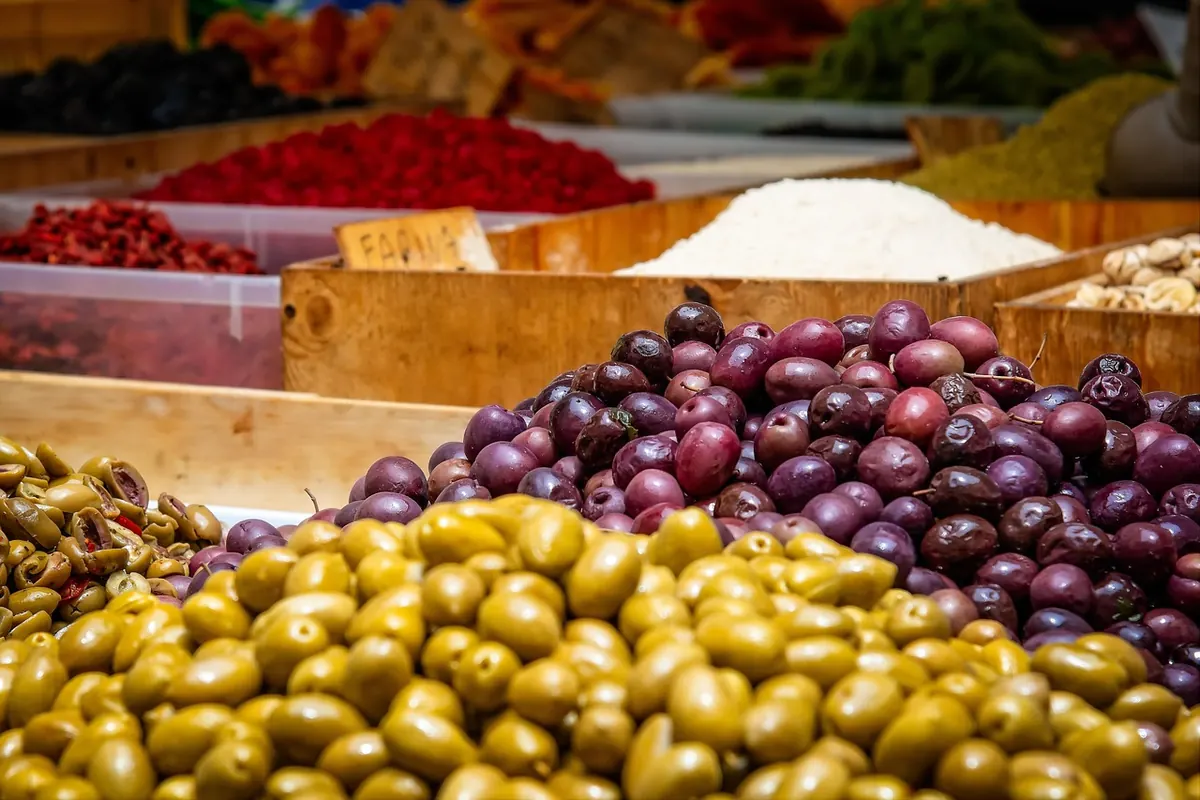
Photo: Tama66 / Pixabay