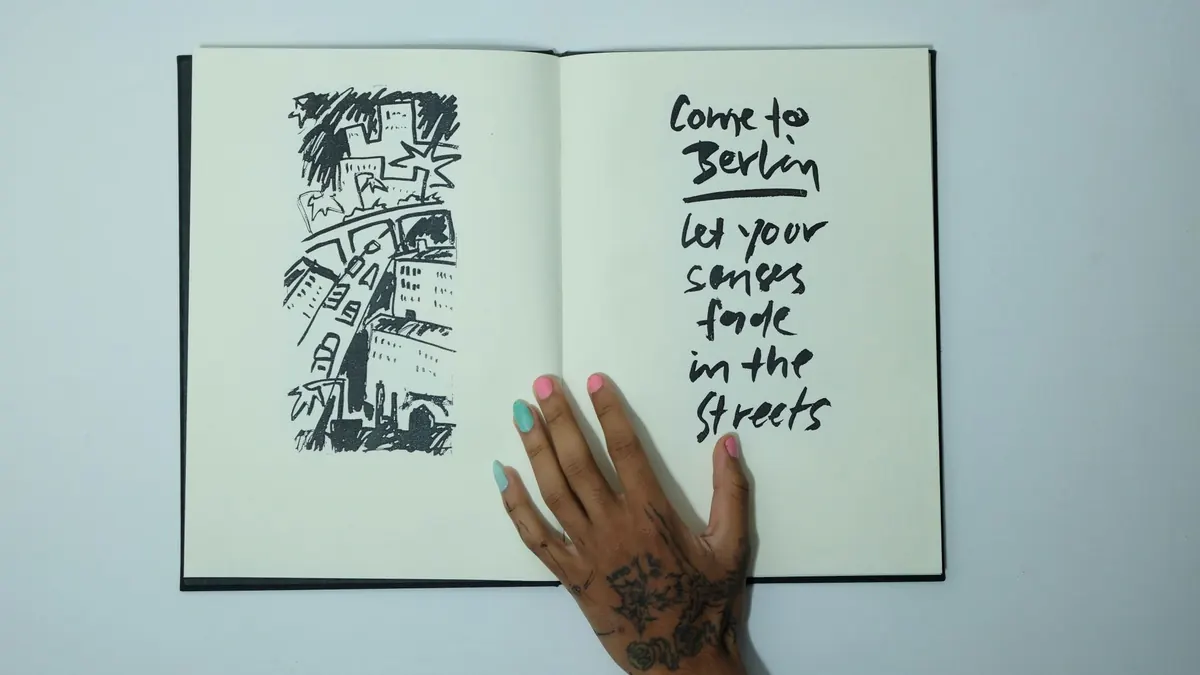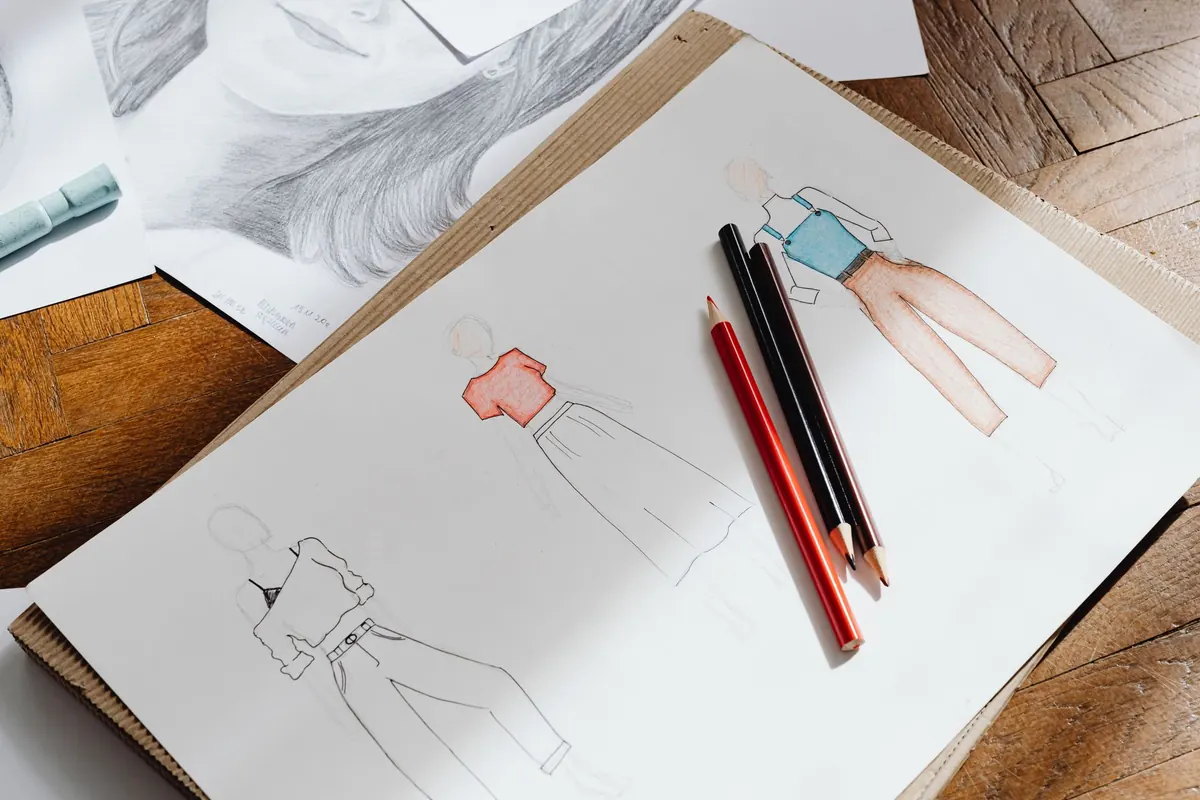
Two sketches of the same subject can look like they came from different hands. One is a flurry of pencil lines that only resolves into a face when you step back. The other is a slow build of tone so considered it could go straight into a frame. Both are finished drawings. The trouble starts when you are not sure which one you set out to make, and you keep adding marks in the hope that the decision will make itself.
Learning where to stop is the real skill, and it is far less mysterious than it sounds. It comes down to knowing what you wanted the drawing to do.
What Loose Sketching Gives You
Loose drawing is not careless drawing. It is drawing with the clock running. When you have two minutes, you cannot trace every contour, so you are forced into the decisions that matter most: the tilt of a spine, the angle of a shoulder, the direction the light is travelling.
That pressure produces qualities careful work often lacks. Confidence, for one. A line drawn once at speed has a spring in it that a line corrected four times rarely keeps. Energy, for another, because the eye joins up the gaps and reads movement into them. Sit in a busy café with a pen and no eraser for twenty minutes and you will learn more about gesture than an afternoon of careful copying will teach you.
Where loose sketching goes wrong is when it becomes a hiding place. If every session ends with "it's meant to be loose" while your proportions keep drifting, that is not looseness, it is avoidance. A useful test: every loose sketch should still carry one clear intention. Name it before you start. The weight of the figure on the left hip. The way the shadows cross the pavement. The shape the coat makes when she turns. If you can point to that one idea in the finished drawing, the looseness has done its job.
When Detail Earns Its Place
Detail is a form of prolonged looking. A two-hour study of a hand teaches you how the knuckle sits, how the nail bed curves, where the tendons show. That knowledge travels into every hand you draw afterwards, even if you never render one that carefully again. The same is true of a staircase, a bicycle, a church window, a fold of heavy cloth.
Detail earns its place when you are studying something to understand it, when the subject has structure that falls apart without accurate measurement, or when the drawing is going to someone else and needs to hold up at close range.
The risk is detail without structure. If you start rendering eyelashes before the tilt of the skull is right, the drawing will feel tight and slightly dead no matter how many hours you sink into it. Realistic drawing is not the same thing as detailed drawing. A few accurately placed tonal shapes read more solidly than a hundred cautious outlines.
There is also a point of diminishing returns. Somewhere past an hour on an A4 page, most of us begin adding marks that carry almost no new information while risking the freshness of the whole thing. When you notice yourself redrawing the same edge, put the pencil down and step back.
Selective Finish: The Middle Path
Most satisfying drawings sit between the two extremes. The trick is deciding where the detail goes rather than how much of it there is.
Where to spend your marks
Pick one or two areas and take them further than everything else: a face and hands; the front edge of a building; the centre of a flower. High detail in one place, set against simple shapes elsewhere, makes both look deliberate. It also tells the viewer where to look, which is a gift.
Where to save them
Leave the edges of the drawing alone. Background, clothing folds, the far side of a figure — a couple of confident shapes each, then stop. A quick two-value thumbnail before you begin helps enormously here, because you have already decided which shapes carry tone and which stay as line.
Five Questions That Tell You to Stop
- Does the shape read from arm's length? Hold the sketch out, or step back a couple of metres. If the form has gone vague, more detail on top will not fix it. The problem is underneath.
- Have I lost my lightest light or my darkest dark? When everything settles into the same mid-grey, the drawing is not finished, it is fogged. Lift a few highlights, or simply leave the paper bare in places.
- Am I adding marks out of curiosity, or out of avoidance? Fiddling with a nose while an ear sits in the wrong place is avoidance, and no amount of shading will hide it.
- Would another viewer find my one intention? Not "recognise the subject" — a sketch can be about a mood. But if the idea you named at the start has vanished under the marks, you have overworked it.
- Am I redrawing the same edge? Three passes around one contour usually flatten it. One good line with a tone beside it beats a wobbling outline every time.
Match the Finish to the Job
- Sketchbook practice. The drawing is finished as soon as the idea is captured. That might be forty seconds. Let the page look like a page.
- A study. Finished when your question has been answered — how the light wraps, how the shape turns. Stop the moment you have the answer.
- A piece for someone else. Finished when it holds at normal viewing distance and adding another mark makes it no better. Test it by leaving the room for ten minutes, then coming back cold.
Practice That Builds Judgement
- Draw the same subject three times: two minutes, ten minutes, thirty. Stop when the timer ends, however unfinished it feels. Compare them at the end of the session and notice which one has the most life.
- Work in something that punishes fiddling — a pen, a stick of charcoal, a fat soft pencil. When you cannot erase, you stop redrawing edges and start making decisions.
- Every ten minutes, stand up and look from two metres away. Your eye resets, and the drawing usually tells you what it needs next.
- Finish deliberately early. Take a drawing you would normally push another twenty minutes and stop ten short, on purpose. Sign and date it. The mild discomfort is the lesson.
- Write one line on the back of each sketch saying what it was about. A month of those notes will show you where you overwork — faces, buildings, or the evenings when you are tired.
Stop on Purpose
There is no correct amount of detail. A drawing stopped deliberately always looks more confident than one abandoned, and a viewer can feel the difference even if they could not explain it. Before your next sketch, name the single thing it has to say. Decide roughly how long you will give it. Then honour that, and keep the last five minutes for looking rather than adding. Overworked drawings are almost always the product of marks made in those final minutes.
A sketchbook is a place to think, not a gallery, and it needs both speeds in it. Give yourself permission to leave half the page unfinished tomorrow, and see what you learn from it.